Skopelos Unfolded: A Curated Guide
Notice No. 11
PLACE
4/4/20265 min read
A starting point
This is not a complete map of Skopelos. It is a starting point.
The island is best experienced slowly, from one place, returning to it between drives, swims, and meals. What follows is a curated selection of places that feel aligned with Skopelos itself.
Think of the guide as a considered foundation from which to shape your own days.
Use it to begin. Then allow the island take over.
This Notice accompanies Skopelos: The Island of Blue and Green, a more reflective account of the island’s pace and presence.
Getting There
Skopelos does not have its own airport. The most common entry point is Skiathos, roughly 45 minutes away by ferry. Flights to Skiathos operate from major European hubs, particularly during peak summer months.
From Skiathos, ferries run regularly to Skopelos Town and Agnontas Harbor. A car or taxi can meet you at the port if you’re staying elsewhere on the island.
For travelers preferring the sea route from the mainland, ferries depart Volos, Agios Konstantinos, and Mantoudi. Travel times vary from 2–5 hours depending on the departure point.
Best Time to Go
Late May through early July is ideal. The sea has warmed, the hills are green, and the island moves at its natural rhythm.
September is equally strong, with softer light, fewer visitors, and long afternoons that stretch easily into evening.
July and August bring more movement. Not overwhelming, but noticeably fuller. If you go then, plan early mornings and later dinners.
Skopelos is less about season and more about tempo and so its advised to choose a time when you can move slowly.
How Long to Stay
7+ days is recommended for a true experience.
Skopelos reveals itself gradually. A week or more allows time to revisit beaches, settle into routines, and move at the island’s natural pace.
Three or four days are enough to see highlights, but the experience will feel compressed.
Stays
Camellia Home
A hilltop house with open sea views and olive trees framing the terrace. A short walk down to Stafylos beach, with a restaurant tucked into the hillside below. Five minutes drive to Chora. The house feels contained, private, and open all at once. Ideal as a single base for the island.
Kyklamino Home
A considered alternative just below Camellia Home. Similar views and positioning. Calm, well-designed, and functional.
Why Stafylos?
A private oasis, close to Chora, easy beach access, and well-positioned for exploring the rest of the island, a car is a must on Skopelos.
Beaches
Stafylos Beach
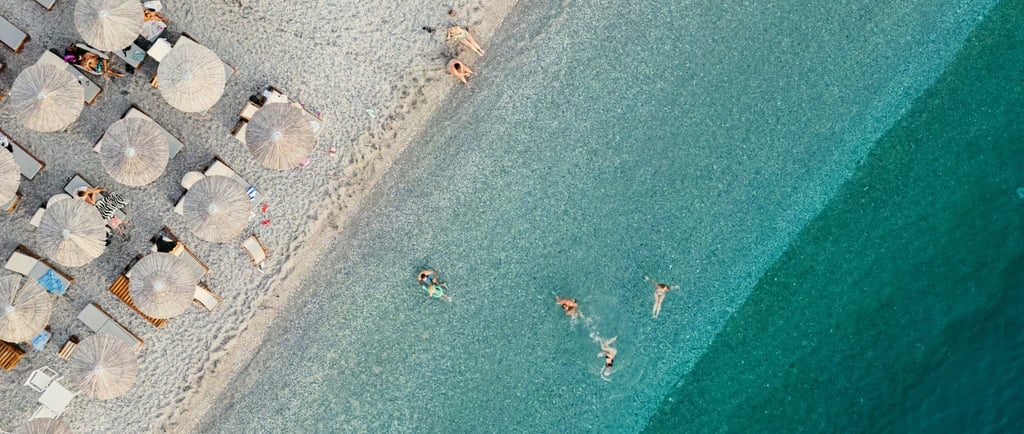
Close, easy, familiar. Clear water, pebbled shore. The beach that becomes part of your routine.
Velanio Beach
Beyond Stafylos beach, a narrow footpath leads toward a smaller hidden cove, Velanio. Quiet, turquoise waters, edged by rock and pine.
Limnonari Beach
A curved bay with calm, shallow water that holds its color even in wind. One of the island’s most swim-friendly stretches. Lunch at the simple beach restaurant.
Agnontas Beach
A small fishing harbor rather than a dramatic shoreline, calm and intimate. Good for slower afternoons. Eat at Mouria Fish Tavern, fresh fish simply prepared, tables nearly touching the water under a tree canopy.
Kastani Beach
Known for its role in Mamma Mia!. Pale stones, clear water, and space to settle. Best early or later in the day with more luxurious beach bars and loungers lining the shore.
Towns
Skopelos Chora
The main town rises upward in stone steps and white walls. Evenings are for wandering without intention. Small shops, quiet squares, and the gradual shift from day to night.
Glossa
The upper village. Narrower streets, older rhythm. Less visited, more local with artisan shops. Dinner at Agnanti Restaurant with elevated views and traditional cooking. Order the meat with plums. It feels specific to this place.
Restaurants
Agnanti Restaurant
Traditional island dishes, executed without embellishment. One of the most defining meals on the island.
Mouria Fish Tavern
Right on the water of a fishing village. Grilled fish, simple preparations, no separation between table and sea. Great for midday lunch after a swim or long days that strech into dinner.
Stafylos Hillside Restaurant
Above the beach, set slightly back among trees. Soft light at night, the sea below, steps down to the water. Works equally well for lunch or a quiet dinner.
Limnonari Beach Restaurant
Unrushed, casual and well-placed right on the beach. Great for midday food after a swim in the sea. Invites you to stay longer than planned.
To See
Agios Ioannis Chapel
Often referred to as the “Mamma Mia chapel,” this small white church sits dramatically atop a rock outcrop above the sea. Reached by climbing a long stone staircase, it offers wide views and a striking setting. Its role in Mamma Mia! made it recognizable, but in person it feels simple and exposed; wind, sky, and water.
Venetian Castle
In Skopelos Town, remains integrated into the town layout. It is beautiful to walk in the late afternoon and evening.
Beyond the Island
Alonissos
Is a smaller, quieter island known for its marine park and natural beauty. Worth a day trip if you’re seeking seclusion.
Tripia Petra
On the larger Skiathos, is a natural rock arch rising from the sea, reached by boat. No infrastructure, only stone and water. Its clarity and striking form make it a memorable stop, even if you don’t spend time on Skiathos itself. Go early and let it feel discovered.
Culture & History
Skopelos belongs to the Sporades, a group of islands known for dense pine forests, a contrast to the more arid Cyclades. This is what gives Skopelos its distinct character: green terrain meeting clear water.
Skopelos has been continuously inhabited since antiquity and was known in ancient Greece as Peparithos, named after the son of Dionysus. Wine production was central to the island’s identity and remains part of its agricultural landscape today.
Historically, the island was a maritime center, known for shipbuilding and trade. Its architecture reflects continuity rather than reinvention: whitewashed houses with wooden balconies, stone paths built for walking, churches embedded into the terrain rather than placed above it.
There are said to be over 300 chapels and churches scattered across the island, small, white, often unmarked. Faith here feels woven into geography rather than displayed.
Even its most globally recognized reference, Mamma Mia!, feels absorbed. The island did not transform itself around the film. It remained structurally the same, steady, residential, local.
Skopelos is not curated for visitors. It is lived in.
How to Move Through It
Car: Essential. Distances are short, but the island is not walkable in a meaningful way. Moving between beaches, towns, and restaurants requires renting a car.
Plan loosely: One beach per day, one anchored meal (lunch or dinner), leave space in between.
Return: Revisit beaches, restaurants, and towns at different times of day. Skopelos unfolds through repetition, not completion.
How to Approach the Island
Stay in one place.
Drive without urgency.
Return to the same beach more than once.
Choose fewer restaurants, linger longer.
Skopelos does not reward optimization. It reveals itself through repetition.
Final Take
Skopelos is not about volume, not how many beaches you see or restaurants you try.Skopelos is not a place to conquer. It is a place to inhabit, lightly, quietly, and without urgency.
It works best when you repeat places, return at different times of day, and allow familiarity to build. The value is in staying long enough for the island to feel predictable. That’s when it becomes good.
This guide is intentionally incomplete. It offers a structure, a place to stay, beaches to return to, tables to sit at. Beyond that, the island invites you to find your own version of it.
Blue and green. Pine and salt.
Begin here — and let the rest unfold.